February 27-28 2026
Institut du Cerveau - Paris
ABOUT
ABOUT
ABOUT
48 hours to crack a computational neuroscience puzzle.
0
0
ATTENDEES
0
0
ATTENDEES
0
0
ATTENDEES
0
0
PROJECTS
0
0
PROJECTS
0
0
PROJECTS
0
0
JURY MEMBERS
0
0
JURY MEMBERS
0
0
JURY MEMBERS
0
0
CONFERENCE
0
0
CONFERENCE
0
0
CONFERENCE
WHAT'S ON
WHAT'S ON
WHAT'S ON
Decide on your favorite project
Video game controlled by brain activity
01
The goal is to create a video game in which actions are entirely controlled by brain activity, using an EEG headset. The team will use several brain signals to generate commands in real time. At the same time, the game's graphics and interaction mechanics will need to be enhanced, based on an existing framework.
Video game controlled by brain activity
01
The goal is to create a video game in which actions are entirely controlled by brain activity, using an EEG headset. The team will use several brain signals to generate commands in real time. At the same time, the game's graphics and interaction mechanics will need to be enhanced, based on an existing framework.
Video game controlled by brain activity
01
The goal is to create a video game in which actions are entirely controlled by brain activity, using an EEG headset. The team will use several brain signals to generate commands in real time. At the same time, the game's graphics and interaction mechanics will need to be enhanced, based on an existing framework.
Manipulate brain code in real time
02
Can spatial memory be read directly from raw neural activity?
This project aims to develop a decoder capable of linking, in real time, high-dimensional neural data to the position of a mouse in a maze. The model will be able to detect reactivations during different states of alertness.
Manipulate brain code in real time
02
Can spatial memory be read directly from raw neural activity?
This project aims to develop a decoder capable of linking, in real time, high-dimensional neural data to the position of a mouse in a maze. The model will be able to detect reactivations during different states of alertness.
Manipulate brain code in real time
02
Can spatial memory be read directly from raw neural activity?
This project aims to develop a decoder capable of linking, in real time, high-dimensional neural data to the position of a mouse in a maze. The model will be able to detect reactivations during different states of alertness.
Emotions, memory, and sleep
03
This project is based on electrophysiological recordings of different brain regions in behaing and sleeping animals. The aim is to examine how information circulates during sleep and to determine whether contextual information is reactivated and encoded after an emotional experience.
Emotions, memory, and sleep
03
This project is based on electrophysiological recordings of different brain regions in behaing and sleeping animals. The aim is to examine how information circulates during sleep and to determine whether contextual information is reactivated and encoded after an emotional experience.
Emotions, memory, and sleep
03
This project is based on electrophysiological recordings of different brain regions in behaing and sleeping animals. The aim is to examine how information circulates during sleep and to determine whether contextual information is reactivated and encoded after an emotional experience.

Have an idea?
If you have neuroscience-related data and an interesting challenge to propose, we are open to propositions
FEBRUARYY 27-28, 2026
FEBRUARYY 27-28, 2026
FEBRUARYY 27-28, 2026
Agenda
HACKTION POTENTIAL
HACKTION POTENTIAL
Feb 19th
From 6pm
Introduction
Projects presentations
Team attribution
Discussion
Feb 27th
From 9am
Welcome participants
Define team roles
Outline the steps
Lunch
Develop creative solutions
Feb 28th
From 9am
Finalisation of softwares / prototypes
Lunch
Prepare presentations
From 3pm
Presentation to jury
Conference on computational neuroscience
Awards ceremony
Feb 19th
From 6pm
Introduction
Projects presentations
Team attribution
Discussion
Feb 27th
From 9am
Welcome participants
Define team roles
Outline the steps
Lunch
Develop creative solutions
Feb 28th
From 9am
Finalisation of softwares / prototypes
Lunch
Prepare presentations
From 3pm
Presentation to jury
Conference on computational neuroscience
Awards ceremony
Feb 19th
From 6pm
Introduction
Projects presentations
Team attribution
Discussion
Feb 27th
From 9am
Welcome participants
Define team roles
Outline the steps
Lunch
Develop creative solutions
Feb 28th
From 9am
Finalisation of softwares / prototypes
Lunch
Prepare presentations
From 3pm
Presentation to jury
Conference on computational neuroscience
Awards ceremony
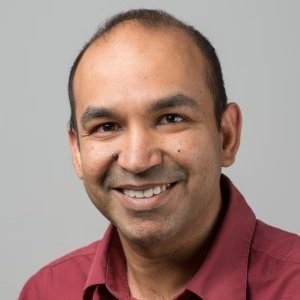
Sabir Jacquir
Paris Saclay University
Full Professor - Paris-Saclay Institute of Neurosciences (Neuro-PSI)
Sabir Jacquir
Paris Saclay University
Full Professor - Paris-Saclay Institute of Neurosciences (Neuro-PSI)
Sabir Jacquir
Paris Saclay University
Full Professor - Paris-Saclay Institute of Neurosciences (Neuro-PSI)
REGISTER
REGISTER
REGISTER
Register now
Register now to secure your spot. Registration close on February 1st.
Active participant (students only)
10€

Two days Hackathon entry, register to crack a neuroscience puzzle in teams
Collaborate on the project of your choice
Opportunity to win a prize
Network over free lunches
Active participant (students only)
10€
Two days Hackathon entry, register to crack a neuroscience puzzle in teams
Collaborate on the project of your choice
Opportunity to win a prize
Network over free lunches
Active participant (students only)
10€
Two days Hackathon entry, register to crack a neuroscience puzzle in teams
Collaborate on the project of your choice
Opportunity to win a prize
Network over free lunches
Public Admission
0€

Access to the presentations (Feb 28th at 3pm)
Learn what the teams developed
Listen to a computational neuroscience conference
Enjoy the awards ceremony
Public Admission
0€
Access to the presentations (Feb 28th at 3pm)
Learn what the teams developed
Listen to a computational neuroscience conference
Enjoy the awards ceremony
Public Admission
0€
Access to the presentations (Feb 28th at 3pm)
Learn what the teams developed
Listen to a computational neuroscience conference
Enjoy the awards ceremony
SPONSORS
SPONSORS
SPONSORS
They helped us building this event.
FAQ
FAQ
FAQ
FAQ
Still got questions? Feel free to reach out. We're happy to help.
Questions 1 ?
blabla
Question 2 ?
blabla
Question 3 ?
blabla
Questions 1 ?
blabla
Question 2 ?
blabla
Question 3 ?
blabla
Questions 1 ?
blabla
Question 2 ?
blabla
Question 3 ?
blabla